


The short answer: Selling a home in Fort Pierce, FL starts with one question: is your parcel inside the City of Fort Pierce, unincorporated St. Lucie County or St. Lucie Village? That answer decides where you search permits and code liens. Then plan your FPUA final bill, check the historic district register and gather flood records.
By Jeremy Beckham, REALTOR®, SFR | Last updated: November 15, 2026
Fort Pierce has a lot of older housing, and older houses come with longer permit, utility and insurance histories. Across the North Bridge and South Bridge you get a different sale entirely, with beach condos and gated island communities. My Fort Pierce area guide covers the neighborhoods. This post covers the seller steps that are specific to Fort Pierce.
The Florida-wide basics live in other posts so I don’t repeat them here. Roof, 4-point and wind mitigation reports and the state flood disclosure are in my Stuart seller checklist. HOA disclosure and estoppel fee caps are in my Tradition seller guide. Condo milestone and reserve study basics are in my Jensen Beach seller guide.
Key takeaways
- A Fort Pierce mailing address doesn’t mean City of Fort Pierce. The St. Lucie County Property Appraiser record shows your jurisdiction, and that decides who holds your permits and code liens.
- The City posts six historic districts. If your house is on the City’s historic register, exterior work, roofs and windows included, needs a Certificate of Appropriateness before you start.
- FPUA bills property owners an inactive account charge even when a vacant house is shut off, and unpaid charges can become a lien.
- The City of Fort Pierce holds a Class 6 flood rating, which the City says means 20% off new or renewed NFIP policies in high-risk zones and 10% elsewhere. Unincorporated parcels with a Fort Pierce address fall under St. Lucie County’s own CRS class.
Fort Pierce seller checklist at a glance
| What to check | Where to look | When |
|---|---|---|
| Jurisdiction (City, County or St. Lucie Village) | St. Lucie County Property Appraiser, Basic Info or Summary tab | Before anything else |
| Permit history | City: EPL Civic Access portal. County: EnerGov self-service | Before photos |
| Code liens and open cases | City lien search through EPL; County lien search, $20 | 4 to 6 weeks out |
| Historic district status | Fort Pierce Register of Historic Places | Before any exterior repair |
| FPUA balance and final bill | FPUA Customer Service, (772) 466-1600 ext. 3900 | Listing and closing |
| Elevation certificate | City Building Department, (772) 467-3718 | Before listing |
| Association estoppels (island communities) | Your POA and building manager | 6 to 8 weeks out |
Is my Fort Pierce home in the city or the county?
Look it up before you do anything else. Fort Pierce mailing addresses cover the City of Fort Pierce, a large unincorporated area of St. Lucie County, and St. Lucie Village. St. Lucie County’s code office tells owners to check the Property Appraiser’s Basic Info or Summary tab, where the jurisdiction is listed.
That one line changes three things in your sale:
- Who has your permit history. The City of Fort Pierce runs permits through its Enterprise Permitting and Licensing system, called EPL, and its Civic Access portal. Unincorporated parcels are in St. Lucie County’s EnerGov system.
- Who searches your code liens. The City and the County each run their own lien search, described below.
- Who answers code questions. The County lists City of Fort Pierce code enforcement at (772) 467-3720, St. Lucie Village at (772) 466-6900, and its own code office at (772) 462-1571.
On the island, the jurisdiction can change from one building to the next. My South Hutchinson Island seller guide walks through where the City, County and Martin County lines fall south of the inlet.
How do I check my permit history before I list?
Search your address in the right system, then close anything still open. City parcels go through the EPL Civic Access portal, which the City says lets you track permit and application status online. County parcels go through St. Lucie County’s EnerGov self-service site. Do this before photos, so an open permit doesn’t surface during the buyer’s title work.
Two things I look for:
- Permits that were opened but never got a final inspection. These are the ones that stall closings. The contractor who pulled it, or you as the owner, has to get the final done or the permit closed out.
- Work with no permit at all. Per the City’s code enforcement FAQ, if a prior owner built a shed or fence without a permit, the City cites the current owner, who can then pursue a civil case against the seller. Buyers’ agents know this, so expect questions.
County-side homes follow the same steps in EnerGov. My Port St. Lucie seller guide has more on how open permits get closed out under Florida law.
How do I check for code liens and open cases on a Fort Pierce home?
Order a lien search from whichever government covers your parcel. The City of Fort Pierce takes municipal lien search applications through EPL, per its Public Records Request page. St. Lucie County charges $20 per address through EnerGov and says results come in 3 to 10 business days after payment.
A few details matter here:
- The County search is narrow. Its page says results cover code violations, code liens and citations, but not open permits or utility bills, and payoff amounts are a separate request. Check permits and FPUA separately.
- A pending hearing has to be disclosed. The City’s FAQ cites Florida Statute 162.06(5): if your property is in a code case before the Code Enforcement Board or Special Magistrate, you have to tell the buyer in writing before you transfer it. The case doesn’t go away at closing.
- Reducing a City lien takes time and money. The City’s lien reduction form says every violation on the property must be in compliance first, and each reduction request carries a $250 non-refundable fee. Hard costs like recording and mailing can’t be waived.
The City’s process page says a lien gets recorded after three months of accruing fines. If you have an open code case, call the officer named on the notice before we list.
What if my house is in a Fort Pierce historic district?
Then exterior work needs approval before it starts, and that changes how you prep. The City’s Historic Preservation page says Fort Pierce has six designated historic districts. Chapter 23 of the City code requires a Certificate of Appropriateness before a designated property is altered, restored, moved or demolished.
The City’s register lists properties in six districts: Downtown, Edgartown, Lincoln Park, Oakland Park, Rivers Edge and Sample Oaks. Each property is marked contributing, non-contributing or individually listed. I check the address on the register before we talk about pre-listing repairs.
Here’s why it matters to a seller. The City’s application lists roofs, windows, doors, shutters, fences, porches and sheds as work types that need review. If you planned to replace a tired roof or swap windows to get a better 4-point report, file the Certificate of Appropriateness first. The application costs $10 and asks for a site plan, drawings, photos, and material and color samples. The Historic Preservation Board approves or denies it.
The code also allows an optional pre-application meeting with the City’s historic preservation officer. I’d take it. A short conversation there can save you from ordering windows the Board won’t approve.
Put the district name, the contributing status and any approved work in the listing packet. The City also runs a historic preservation tax exemption program. If you used it, ask the City how it carries to a new owner before you advertise it.
How do I close my FPUA account when I sell?
Use FPUA’s Stop Service Request, or call Customer Service at (772) 466-1600 ext. 3900 or email [email protected]. FPUA, the Fort Pierce Utilities Authority, can bill electric, water, wastewater and natural gas on one account. Its FAQ says your cash deposit is credited to the final bill, and any extra comes back by check.
Some FPUA details catch sellers off guard:
- Give a forwarding address. FPUA mails the refund check to the forwarding address on file. Its FAQ says unclaimed deposits can go to the State of Florida as unclaimed property after six months.
- Shutting off a vacant house doesn’t stop the bill. FPUA’s FAQ explains that property owners pay an Inactive Account Customer (Readiness-to-Serve) charge whether or not the home is occupied. If those charges go unpaid, FPUA says it will eventually place a lien on the property. If you moved out months ago, check the account before closing.
- Your buyer will need the signature page. FPUA’s new-service application asks for the page of the deed or settlement statement showing the buyer, the seller, the address and the closing date, plus the signature page. Its online application must come in by 4 p.m. at least two business days before service is needed. I make sure the buyer’s agent has that page the day we close.
For a vacant listing, FPUA’s 2026 security deposit resolution lets property owners and authorized agents request a temporary five-day turn-on without a deposit. FPUA turns on electric and water at the meter, and every faucet and breaker inside has to be off first. Gas needs someone inside to let the tech in. I schedule inspections and the appraisal inside that window.
Will buyers ask whether my Fort Pierce home is on septic?
Yes, especially in older neighborhoods. FPUA runs a septic-to-sewer conversion program. Its FAQ gives the residential cost without grants as $9,720 or more, and lists $10,395 or more in its cost comparison. It also says no grant funding was available at the time and grants won’t apply after the fact.
FPUA’s program covers its own service area, so on the County side, confirm who your sewer provider is first. If you’re on septic, find the septic permit and any pump-out receipts, and ask FPUA whether sewer runs on your street. FPUA’s FAQ lists an average sewer fee of $45.05 a month for 3,000 gallons, which helps a buyer compare monthly costs. If you don’t know which you have, I’ll confirm it with FPUA before you fill out the disclosure.
What flood paperwork should a Fort Pierce seller have ready?
Your flood zone, your elevation certificate if you have one, and your current flood policy. The City of Fort Pierce holds a Class 6 Community Rating System rating, which it says means 20% off new or renewed policies in high-risk zones and 10% elsewhere. That covers homes inside city limits; unincorporated parcels fall under St. Lucie County’s own CRS class.
The City has been in the National Flood Insurance Program since 1977. The City Building Department may already have your elevation certificate. Call (772) 467-3718 or email [email protected] for a copy. If there isn’t one, a licensed surveyor can do it.
The City’s flood page notes that federally backed mortgages require flood insurance in a Special Flood Hazard Area and that a new policy takes 30 days to take effect. If your home is in one, hand buyers the elevation certificate early.
Selling on the island: what does an Ocean Village sale need?
The POA’s paperwork, plus your own building’s papers if your building has an association. Ocean Village is a gated beachfront community at 2400 South Ocean Drive, managed by FirstService Residential. Its site lists 16 properties, from Beachtree and Catamaran to Golf Lodges, Ocean Villas and SouthPointe Homes.
The Ocean Village POA’s order page says standard estoppels take 7 to 10 business days, rush estoppels take 3, and every estoppel order has been prepaid since January 1, 2024. The POA also runs an Architectural Review Board, so have approvals for any exterior changes in your file.
For the condo buildings there, plan on the milestone inspection, structural integrity reserve study and insurance questions covered in my Jensen Beach seller guide. See my Ocean Village guide for the community itself, and my North Hutchinson Island area guide for the condos north of the inlet.
How should I price a Fort Pierce home?
Price against homes on your side of town and your side of the bridge. A house in a historic district, a newer home in a gated subdivision and an island condo sell to different buyers, so a citywide median tells you little. I compare homes with the same jurisdiction and utility setup, because sewer versus septic changes the monthly cost.
The Fort Pierce interchanges on FDOT’s I-95 list include Exit 129 at SR 70, Exit 131 at Orange Avenue and Exit 138 at Indrio Road. Buyers working in Port St. Lucie or Vero Beach care which one is closest.
Read what sellers pay at closing in Florida to estimate your net, and my St. Lucie County property tax guide for how your buyer’s tax bill can change. My utilities by county and city page lists who serves each area. Buyers can browse my Fort Pierce homes for sale page.
Frequently asked questions
How do I find out if my Fort Pierce address is inside city limits?
Look up your parcel on the St. Lucie County Property Appraiser site and read the jurisdiction on the Basic Info or Summary tab. It will show the City of Fort Pierce, unincorporated St. Lucie County or St. Lucie Village. That answer tells you which permit system and lien search to use.
Do I keep paying FPUA after I shut off service at a vacant house?
Usually, yes. FPUA bills property owners an Inactive Account Customer (Readiness-to-Serve) charge whether or not the home is occupied, because it still maintains the meter and the system. FPUA says unpaid charges can lead to a lien, so check the account before closing.
Can I get the power and water on for a home inspection at a vacant Fort Pierce listing?
Yes. FPUA’s 2026 deposit resolution lets property owners and authorized agents request a temporary five-day turn-on without a deposit. Every inside faucet and breaker has to be off when FPUA turns service on at the meter. Book the inspection and appraisal inside those five days.
Do I need City approval to replace the roof on a house in a Fort Pierce historic district?
If the house is on the Fort Pierce Register of Historic Places, yes. The City code requires a Certificate of Appropriateness before exterior alterations, and the application lists roofs, windows, doors, shutters and fences. The fee is $10, and the Historic Preservation Board approves or denies it.
What happens if my Fort Pierce home has an open code case when I sell?
You have to tell the buyer. The City cites Florida Statute 162.06(5), which requires a seller to disclose a pending Code Enforcement Board or Special Magistrate case in writing before transferring the property. The case continues after closing, and the new owner gets time to fix it.
Can a Fort Pierce code lien be reduced before closing?
Sometimes. The City’s form says every violation on the property must be brought into compliance first, then the owner or an authorized agent files a reduction request with a $250 non-refundable fee. Hard costs such as recording and mailing can’t be waived, so start early.
How long does an Ocean Village estoppel take?
The Ocean Village POA’s order page says standard estoppels take 7 to 10 business days and rush estoppels take 3 business days. Orders have been prepaid since January 1, 2024. If your building has its own association, order that estoppel separately from the building’s manager.
Ready to sell in Fort Pierce?
I’ll confirm your jurisdiction, pull your permit and lien history, check the historic register and your FPUA account, and price your home against the Fort Pierce homes your buyers will actually tour. Call or text me at 772.475.5371.
About the author
Jeremy Beckham, REALTOR®/SFR with NextHome Treasure Coast, 17 years helping buyers and sellers from Fort Pierce south through Martin County and the Palm Beaches, from an office at 414 S Colorado Ave in Stuart. Reach me at 772.475.5371 or [email protected]. See how I source my numbers or my seller services.
General information, not legal, tax or insurance advice. Utility charges, fees, historic rules and code procedures change, so confirm with the City of Fort Pierce, St. Lucie County, FPUA, your association, your title company and a Florida real estate attorney.
Sources
- St. Lucie County, Code Enforcement Contacts (verify jurisdiction on the Property Appraiser Basic Info or Summary tab; City of Fort Pierce, St. Lucie Village and County code phone numbers)
- St. Lucie County, Lien Search and Payoff Request ($20 per address, 3 to 10 business days, what results do and don’t cover)
- City of Fort Pierce, Public Records Request (lien search applications and building code violation requests through EPL)
- City of Fort Pierce, Enterprise Permitting and Licensing (EPL) (Civic Access portal, permit status tracking)
- City of Fort Pierce, Code Enforcement FAQs (unpermitted work cited to current owner, F.S. 162.06(5) disclosure, code enforcement phone)
- City of Fort Pierce, Code Enforcement Process (lien after three months of accruing fines, nuisance abatement)
- City of Fort Pierce, Request for Reduction of Penalty (PDF) (compliance first, $250 per request, hard costs not waived)
- City of Fort Pierce, Historic Preservation (program since 2001, six historic districts, tax exemption program, Certificate of Appropriateness through EPL)
- City of Fort Pierce, Fort Pierce Register of Historic Places (PDF) (Downtown, Edgartown, Lincoln Park, Oakland Park, Rivers Edge and Sample Oaks districts; contributing, non-contributing and individual status)
- City of Fort Pierce, Certificate of Appropriateness Application (PDF) ($10 fee, work types, Chapter 23 Sections 23-41 and 23-44)
- City of Fort Pierce, National Flood Insurance Program (NFIP since 1977, CRS Class 6, 20% and 10% discounts, 30-day waiting period)
- City of Fort Pierce, Elevation Certificates (Building Department copies, (772) 467-3718)
- Fort Pierce Utilities Authority, Customer Service FAQs (deposit refunds, unclaimed deposits, inactive account charges and liens, meter removal, turn-on rules, ownership documents)
- Fort Pierce Utilities Authority, Customer Service Information (Stop Service Request)
- Fort Pierce Utilities Authority, Start New Residential Services Request (4 p.m., two business days, settlement statement pages)
- Fort Pierce Utilities Authority, Resolution UA 2026-01, Security Deposits (PDF) (temporary five-day turn-on for owners and authorized agents)
- FPUA Sustainable Sewer, Septic to Sewer Conversion FAQs (conversion cost without grants, funding status, average sewer fee)
- Ocean Village Property Owners’ Association, home page (2400 South Ocean Drive, FirstService Residential, 16 properties, Architectural Review Board) and Order Documents (estoppel timing and prepayment)
- Florida Department of Transportation, I-95 exit numbers (Exits 129, 131 and 138)
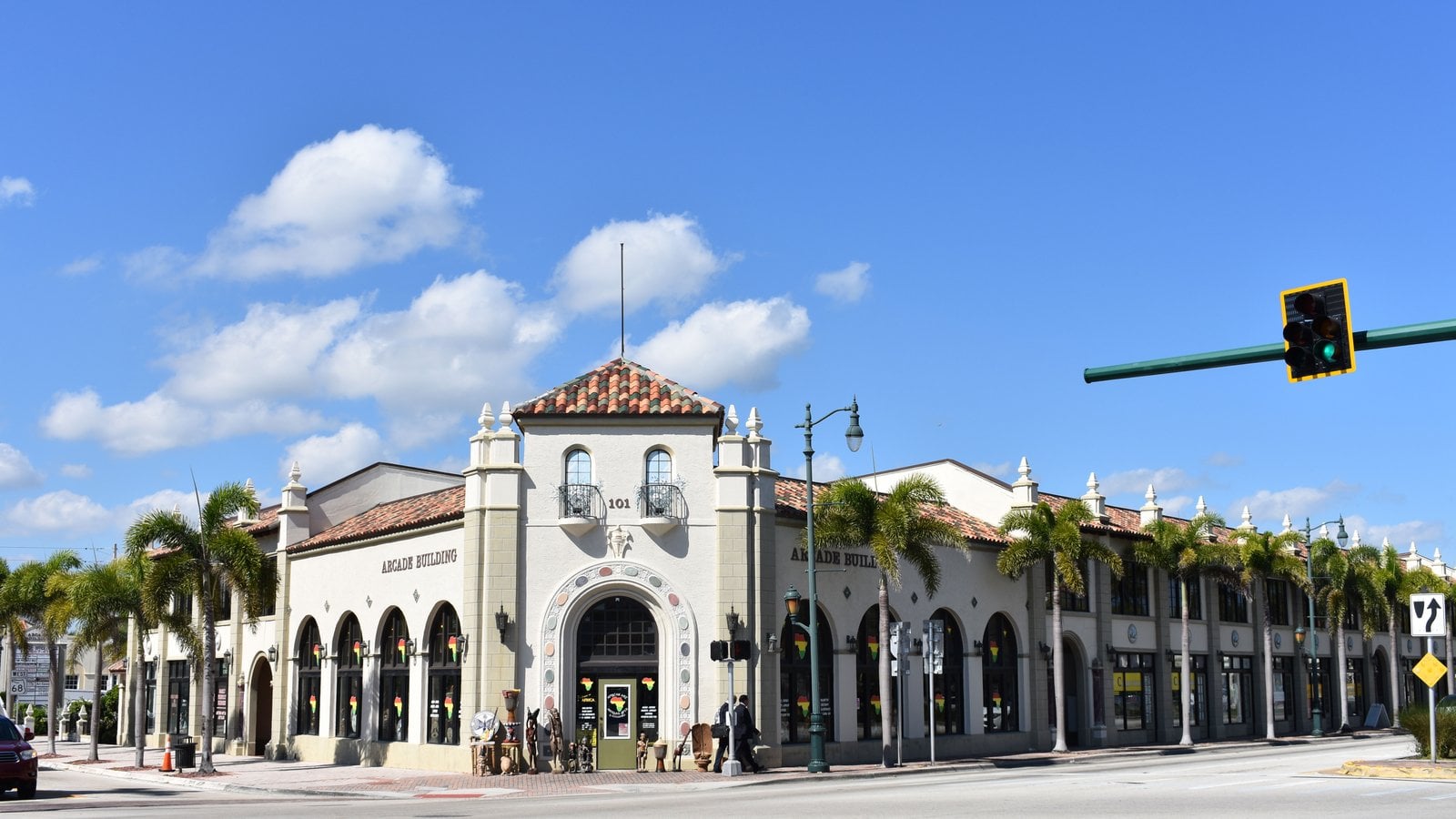
Featured photo: The 1926 Arcade Building in downtown Fort Pierce, by Tamanoeconomico, via Wikimedia Commons. Licensed under CC BY-SA 4.0. Cropped and resized.