


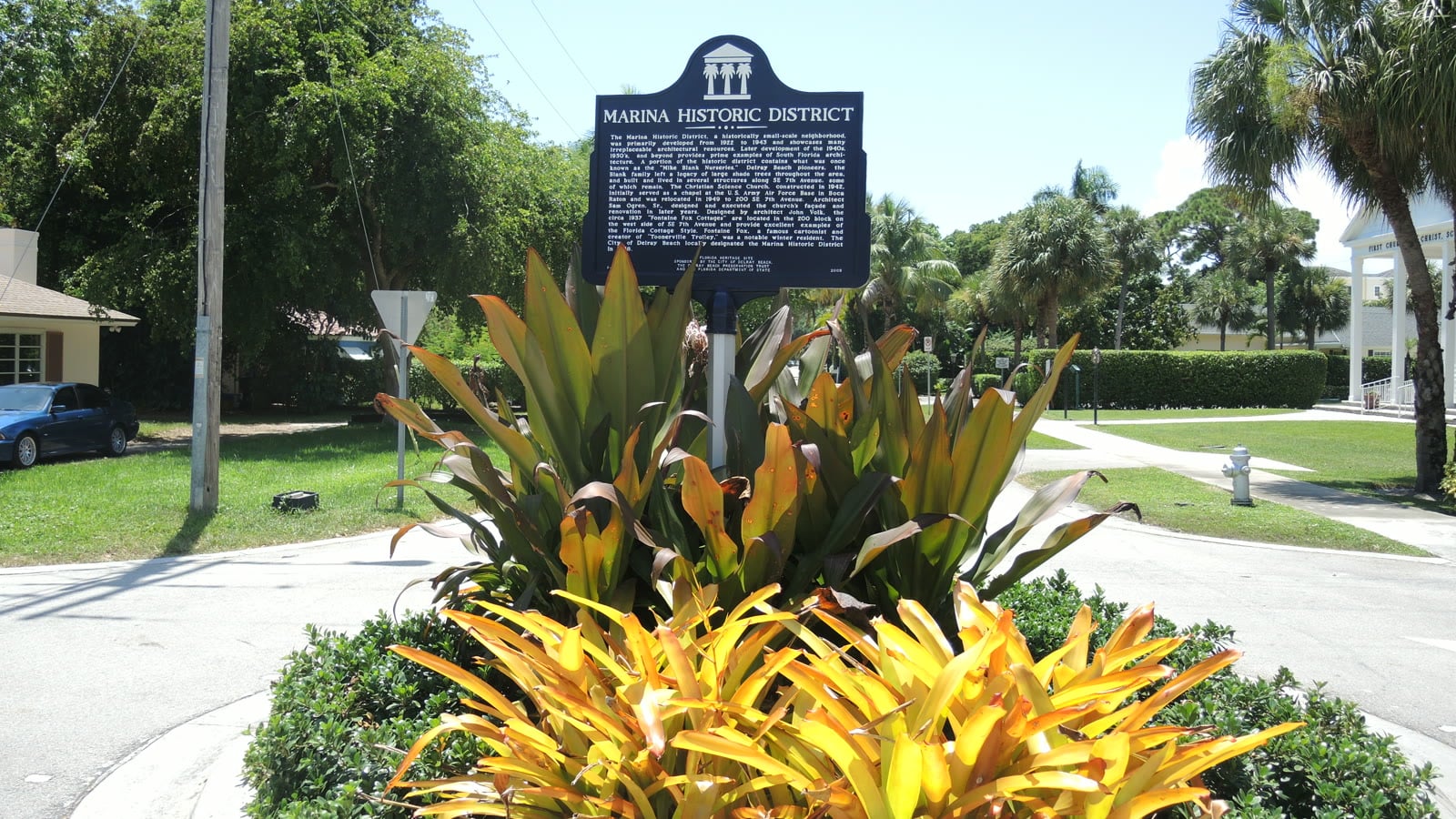
The short answer: Delray Beach has five local historic districts: Old School Square, Del-Ida Park, Marina, Nassau Park and West Settlers. Interior work and routine maintenance are up to you. Exterior changes, a new paint color, a demolition or moving a building all need a Certificate of Appropriateness from city staff or the Historic Preservation Board, contributing house or not.
By Jeremy Beckham, REALTOR®, SFR | Last updated: November 15, 2026
Several of the Delray Beach streets buyers ask me about most sit inside a historic district, from Del-Ida Park north of downtown to the Marina District on the Intracoastal. The question is always the same. What am I allowed to change once I own it?
This post answers it with the City of Delray Beach’s own rules. For the wider town, start with my Delray Beach area guide, and if Del-Ida Park is on your list, my Del-Ida Park neighborhood guide covers the streets and housing stock. You can also browse Delray Beach homes for sale on my search site.
Key takeaways
- Delray Beach has five districts on its Local Register of Historic Places. Two of them, Marina and Old School Square, are also on the National Register.
- The city leaves general maintenance and interior alterations to the owner. Exterior alterations, additions, exterior color changes, demolition and relocation need a Certificate of Appropriateness (COA).
- A COA comes before the building permit. The city won’t issue a permit for exterior work in a district without staff or Historic Preservation Board approval.
- Non-contributing houses still go through review. Demolishing any structure in a district, contributing or not, needs Board approval, and the teardown can’t happen until a permit is issued for what replaces it.
- Owner-occupied contributing homes can qualify for a city tax exemption on approved rehab work for up to 10 years, and an approved exemption stays with the house when it sells.
Delray Beach historic districts at a glance
| District | Roughly where (per the city’s 2018 Design Guidelines) | Local Register | National Register |
|---|---|---|---|
| Old School Square | SE 2nd St to NE 4th St, between NW and NE 1st Avenues | 1988 (Ord. 01-88) | Listed March 14, 2018 |
| Del-Ida Park | NE 4th St to NE 8th St (George Bush Blvd), Swinton Ave to NE 3rd Ave | 1988 (Ord. 09-88) | Not listed |
| Marina | E Atlantic Ave to SE 4th St, SE 7th Ave to the Intracoastal | 1988 (Ord. 156-88) | Listed June 2, 2014 |
| Nassau Park | Two blocks of Nassau St between Venetian Dr and S Ocean Blvd | Ord. 97-87 | Not listed |
| West Settlers | West of Swinton Ave, including blocks of NW 3rd and NW 4th Avenues | 1997 (Ord. 06-97) | Not listed |
Boundaries have changed over time. In 2009 the city removed part of the 300 block from the Marina District, so check the exact parcel with the city rather than relying on a street range.
Which Delray Beach neighborhoods are historic districts?
Delray Beach has five local historic districts: Old School Square, Del-Ida Park, Marina, Nassau Park and West Settlers. The city’s Historic Preservation Ordinance dates to March 1987, and its seven-member Historic Preservation Board reviews work in all five. Two districts, Marina and Old School Square, are also listed on the National Register of Historic Places.
Old School Square is the downtown core around the old school campus at 51 North Swinton Avenue, now the Crest Theatre and the Cornell Museum. Its styles include Frame Vernacular, Bungalow, Mission and Mediterranean Revival. Del-Ida Park was platted in 1923, and its diagonal streets and triangular lots break from the city grid.
The Marina District sits between East Atlantic Avenue and the Intracoastal, with single-family and multifamily homes next to the city marina. Nassau Park is the only district east of the Intracoastal, two blocks of low-scale homes from the 1930s through the 1960s between Venetian Drive and South Ocean Boulevard. West Settlers marks the site of Delray’s first African-American settlement, established in 1894, according to the city’s design guidelines.
What needs a Certificate of Appropriateness in Delray Beach?
You need a Certificate of Appropriateness for exterior alterations or additions to any property in a district, a change of exterior paint color, demolition and relocation of a building. The city leaves general maintenance and interior alterations to the owner. Depending on how big the job is, either Historic Preservation Division staff or the full Board reviews it.
The city’s design guidelines give a simple rule of thumb. If the work doesn’t need a building permit, it generally doesn’t need a COA either (paint color is the main exception), and repairs that restore the original appearance count as maintenance. Interior work is exempt unless the interior itself was designated.
Paint surprises people. Changing the exterior color takes a COA plus the city’s Building Materials and Color Sample Form. For a single-family home or duplex, the COA is the only historic application you need. Commercial and other uses go through both a COA and a site plan review.
The guidelines also say the COA process should be finished before you apply for a building permit. The city won’t issue a permit for exterior work in a district without that approval, so build the review into your timeline.
What does contributing vs. non-contributing mean for a buyer?
A contributing building adds to the historic character the district was designated for. It’s usually more than 50 years old, it existed during the district’s period of significance, and it still looks like it did then. A non-contributing building is newer or so altered that it no longer reflects that era. Both kinds still go through review.
The label matters for two reasons. It sets how much latitude you’ll have with a renovation, and it decides tax-break eligibility, since the city’s exemption only covers contributing or individually listed properties.
Ratings can also change. The city’s 2019 Historic Preservation Element notes that district updates in 2010 added 48 contributing properties in Del-Ida Park, 17 in the Marina District and 13 in Old School Square. Two similar houses on one block can have different ratings, so ask the city about the exact address.
Can you tear down or move a house in a Delray historic district?
Demolition is possible but never quick. Tearing down any structure in a Delray Beach historic district, contributing or non-contributing, needs a Certificate of Appropriateness from the Historic Preservation Board under Land Development Regulation Section 4.5.1(F). The demolition also can’t happen until the city issues a building permit for the work described in that approval.
A buyer planning a teardown needs two approvals, one for the demolition and one for the new house design, and the Board reviews both against the district’s character. Moving a building, whether up, sideways or to another lot, also takes a COA.
The Board can also grant certain variances for nonconforming buildings and lots because they sit in a historic district. If an older house is too close to a lot line by today’s zoning, that relief can make an addition possible where it otherwise wouldn’t be.
How do impact windows and hurricane shutters work on a historic Delray home?
Florida’s building code allows impact-resistant glass in place of shutters, and Delray’s design guidelines accept it. They suggest weighing impact glass mainly when the windows need replacing anyway, and the new windows should look like a historically appropriate type. The Board will consider other window materials case by case if the profile and configuration match the originals.
For shutters, the guidelines prefer removable systems. If tracks stay up year-round, paint them to match the house. Accordion or roll-down shutters should only go where they can’t be seen from the public right-of-way.
If the house still has original windows and no shutters, price out a compliant solution during your inspection period, because it affects both your insurance quote and your budget. For the wider list of insurance inspections on older Florida homes, see my Stuart seller guide, which covers the 4-point and wind mitigation reports.
Is there a tax break for restoring a historic Delray home?
Yes. Delray Beach offers a Historic Property Ad Valorem Tax Exemption for owner-occupied or income-producing properties that are contributing to a district or individually listed. It can exempt 100 percent of the assessed value of qualified improvements for up to 10 years. The work has to start after the city approves a pre-construction application.
The city’s own example uses $25,000 of qualifying work. At its approximate 11.50 mills of City and County millage, that’s $287.50 a year, or $2,875 over 10 years. State law limits the exemption to taxes levied by the government that grants it, so ask staff which levies it covers on your bill. Part of every project has to include visible exterior improvements, and the owner agrees to maintain the character of the property for the full term.
If you buy a house that already has an approved exemption, the city says it passes to you, and section 196.1997 of the Florida Statutes makes the covenant binding on later owners. If the covenant is broken, the owner pays back the taxes that were exempted, plus interest. So ask the seller for the resolution and covenant, and plan any changes so they stay within it.
Federal historic tax credits of up to 20 percent are a separate program for National Register properties, and the city notes that owner-occupied homes don’t qualify.
How do I check a Delray address before making an offer?
Start with the parcel itself. Confirm whether it’s inside one of the five districts or individually listed, whether it’s contributing or non-contributing, and what COAs and permits are already on file. The city’s Development Services Department at 100 NW First Avenue, (561) 243-7000, handles historic preservation questions and applications.
Here is the order I work through with buyers:
- Confirm the district and the contributing status with the city’s historic preservation staff.
- Ask for the COA and permit history so you know what past owners got approved.
- If the seller has a historic tax exemption, get the resolution and the recorded covenant.
- Sketch any plans (addition, windows, pool, paint, teardown) and ask staff whether it’s likely a staff-level review or a Board hearing.
- Line up the answers before your inspection period ends. My post on what buyers can do during the Florida inspection period explains the timing.
For taxes, my Palm Beach County property tax guide and the steps to file homestead after you buy cover what changes in your first year.
How long does Board review take in Delray Beach?
There’s no single answer, because timing depends on whether staff can approve the work or it needs a public hearing. The Historic Preservation Board meets the first and third Wednesday of each month at 6:00 p.m. in the City Commission Chambers at City Hall. Larger projects get scheduled onto those agendas.
The city lists separate COA checklists for minor and major single-family and duplex work, and applications and fees go through its eServices portal. Ask staff which track your project falls in before you sign a contractor agreement.
For a second-story addition or a new house, bring in an architect who knows the district guidelines early.
Frequently asked questions
Does a non-contributing house in a Delray Beach historic district still need a Certificate of Appropriateness?
Yes. The city requires a COA for exterior alterations to any property inside a designated district, not just contributing buildings. The design guidelines say both contributing and non-contributing buildings are reviewed by the Historic Preservation Board and considered on their own merits, so newer houses in Del-Ida Park or the Marina District still go through review.
Can I tear down an older house in Del-Ida Park or the Marina District?
Possibly, but it takes Board approval. Demolishing any structure in a Delray Beach historic district needs a Certificate of Appropriateness from the Historic Preservation Board under LDR Section 4.5.1(F). The city also won’t allow the demolition until a building permit is issued for the replacement work described in that approval.
Does Delray Beach’s historic tax exemption transfer when I buy the house?
Yes. The city says that if a property is sold during the exemption period, the exemption passes to the new owner. Florida law makes the covenant binding on later owners, so you also take on the duty to maintain the qualifying improvements and the historic character until the term ends.
Can I put roll-down hurricane shutters on a historic Delray Beach home?
Usually only where they can’t be seen. The city’s design guidelines say accordion or roll-down shutters should only be considered where they aren’t visible from the public right-of-way. Removable shutters are preferred, and permanent tracks should be painted to match. Impact-resistant glass is allowed when windows need replacing and the design fits the house.
Is exterior paint color reviewed in Delray Beach historic districts?
Yes. Changing the exterior color of a structure in a Delray Beach historic district needs a Certificate of Appropriateness along with the city’s Building Materials and Color Sample Form. The guidelines treat color as a personal choice that also has to fit the character of the neighborhood, so submit your color before painting.
When does the Delray Beach Historic Preservation Board meet?
The Board meets the first and third Wednesday of each month at 6:00 p.m. in the City Commission Chambers at City Hall. It has seven members, and at least five seats go to professionals such as architects, contractors, planners or historians. Smaller jobs can be approved by city staff without a hearing.
Ready to look at Delray’s historic districts?
If you’re weighing a house in Del-Ida Park, the Marina District or Old School Square, I’ll check the district status, the contributing rating and the COA history with you before your inspection period ends. Call or text me at 772.475.5371.
About the author
Jeremy Beckham, REALTOR®/SFR with NextHome Treasure Coast, has spent 17 years helping buyers and sellers from Fort Pierce south through the Palm Beaches, from an office at 414 S Colorado Ave in Stuart. See how I source my numbers, my Boca Raton area guide, my Florida home buyer’s guide, my buyer services or contact me.
General information, not legal, tax or architectural advice. City rules, district boundaries and contributing ratings change, so confirm with the City of Delray Beach Development Services Department, a tax professional and a Florida real estate attorney.
Sources
- City of Delray Beach, Historic Preservation, Historic Preservation Frequently Asked Questions, Historic Districts & Walking Tours and Historic Preservation Applications
- City of Delray Beach, Historic Preservation Board and Historic Preservation Board membership and meetings
- City of Delray Beach, Historic Preservation Design Guidelines, November 2018 (PDF)
- City of Delray Beach, Comprehensive Plan, Historic Preservation Element Data, Inventory and Analysis, 2019 (PDF)
- City of Delray Beach, Historic Preservation Economic Incentives
- City of Delray Beach, Development Applications and Review Process
- The Florida Senate, 2026 Florida Statutes s. 196.1997, Ad valorem tax exemptions for historic properties
Featured photo: Marina Historic District marker, Delray Beach, by Pietro, via Wikimedia Commons. Licensed under CC BY-SA 3.0. Cropped and brightened.