


The short answer: Stuart, FL flood zones come from FEMA maps that took effect February 19, 2020, and every address is in one. The City of Stuart has no Community Rating System class, so city policies get no community flood discount. Unincorporated Martin County gets 25% off in high-risk zones. Citizens wind policies need flood coverage starting January 1, 2027.
By Jeremy Beckham, REALTOR®, SFR | Last updated: November 20, 2026
Martin County is still drying out from November 2026 flooding, and another round of king tides is expected starting November 22, 2026. The question I hear most from Stuart buyers right now is simple: what is this house going to cost to insure? I’ve been in real estate for 17 years, and the answer in Stuart starts with two things the listing won’t tell you. One is the flood zone. The other is which government the parcel sits in.
My Stuart buyer guide covers city limits, dock permits and elevation certificates. My Port St. Lucie flood zone checklist explains zone letters, waiting periods and the seller’s flood disclosure. This post goes further on Stuart: the City and County discount gap, the Citizens deadline six weeks out, wind and deductible paperwork, and the 50% rule.
Key takeaways
- Stuart and unincorporated Martin County both use FEMA flood maps effective February 19, 2020.
- FEMA lists the City of Stuart in the National Flood Insurance Program with no Community Rating System class, so City policies carry no community discount. Unincorporated Martin County is Class 5.
- Citizens policies that include wind need flood coverage for policies effective on or after January 1, 2027, in any flood zone.
- A wind mitigation report on the new OIR-B1-1802 form is good for up to five years, and Florida insurers must file wind mitigation discounts.
- An insurer can’t refuse or nonrenew a home only because the roof is under 15 years old.
- In a high-risk zone, improvements that add up to 50% of the structure’s value can trigger elevation.
Stuart flood and insurance facts at a glance
| Question | Answer (as of November 20, 2026) |
|---|---|
| Current FEMA flood maps | Effective February 19, 2020 (City of Stuart and Martin County) |
| City of Stuart Community Rating System class | None. FEMA lists the City in the NFIP Regular Program with no CRS class |
| Unincorporated Martin County CRS class | Class 5 since April 1, 2023: 25% off in high-risk zones, 10% outside them |
| Most common flood zones in Martin County | A, AE, AH, AO, VE, X and shaded X |
| Hurricane evacuation zones | AB, CD and E, and some areas are in no zone |
| Citizens flood requirement, all remaining wind policies | Policies effective on or after January 1, 2027 |
| Wind mitigation form | OIR-B1-1802 (Rev. 04/26), required for inspections from April 1, 2026, valid up to five years |
| Roof age rule | No refusal or nonrenewal solely for age if the roof is under 15 years old |
| Hurricane deductible options insurers must offer | $500, 2%, 5% and 10% of dwelling limits, with exceptions by dwelling value |
| 50% rule look-back, unincorporated Martin County | Cumulative improvements over five years |
| My Safe Florida Home applicant portal | Closed November 10; expected to reopen December 4, 2026 |
| Martin County Floodplain Coordinator | (772) 288-5466 |
| City of Stuart main line | 772-288-5300 |
What flood zones are in Stuart, FL?
Stuart has the same flood zones as the rest of Martin County: A, AE, AH, AO and VE are high-risk Special Flood Hazard Areas, and X and shaded X are moderate to low risk. FEMA’s current maps took effect February 19, 2020. They added a coastal storm surge and wave study to the riverine maps adopted in 2015.
That 2020 date matters for older paperwork. If a seller hands you a flood determination or an elevation certificate from before 2020, the zone or base flood elevation on it may not match today’s map. The County puts it plainly: “Everyone lives in a flood zone.” What changes is the risk level and whether a lender requires a policy.
To look up a Stuart address, use Martin County’s FEMA Flood Zones Map or the FEMA Flood Map Service Center. The County map also shows a yellow dot where an elevation certificate is on file, and my buyer guide walks through that download.
Flood zones and evacuation zones aren’t the same thing. Martin County’s evacuation zones, AB, CD and E, come from National Hurricane Center storm surge modeling and tell you when to leave. A home outside every evacuation zone can still sit in an AE zone because of a nearby pond or creek. You can check both on the County’s storm surge evacuation zone map, and my moving to Stuart, FL guide covers what each zone means in a storm.
Does a City of Stuart home get a flood insurance discount?
No community discount right now. FEMA’s Community Information System lists the City of Stuart in the National Flood Insurance Program’s Regular Program with no Community Rating System class. Unincorporated Martin County is Class 5 under FEMA’s listing, which Martin County says gives unincorporated residents 25% off in high-risk zones and 10% elsewhere.
So two houses with a Stuart mailing address, a few streets apart, can be priced under different community ratings because one is inside city limits and one isn’t. Neighboring towns differ too, as the FAQ below shows. Port St. Lucie and unincorporated St. Lucie County both carry a Class 5 flood discount, which I cover in my Port St. Lucie home insurance and flood zones guide. The Town of Jupiter and unincorporated Palm Beach County are both Class 5 as well, as my Jupiter flood zones and home insurance guide explains.
Here’s how I handle it. First, confirm city or county with the levy code, as my Stuart property taxes guide explains. Then ask the insurance agent which community the quote uses. Martin County tells policyholders to check the community rating on the policy at renewal.
Do I need flood insurance if Citizens insures my Stuart home?
Yes, if the Citizens policy includes wind and isn’t a condo unit owners policy. Section 627.351(6)(aa), Florida Statutes, requires flood coverage for all remaining personal lines residential policies effective on or after January 1, 2027. Homes in high-risk zones have needed it since 2023. Policies without wind coverage are exempt.
The statute says the flood policy must at least match the dwelling coverage available from the National Flood Insurance Program, and it can come from the NFIP or a private flood carrier. In its policyholder newsletter, Citizens notes that private carriers aren’t required to ask for flood coverage, so a higher private quote can cost less once you add the flood policy a Citizens home would need.
Two more lines in that statute matter on the water. A Citizens policyholder who files a water damage claim has the burden of proving the damage wasn’t caused by flooding. And a major structure built or enlarged by more than 25% under a permit applied for after July 1, 2015, seaward of the coastal construction control line, isn’t eligible for Citizens at all. If you’re looking at beachfront on Hutchinson Island, ask about that before you write an offer.
How do wind mitigation, roof age and hurricane deductibles change a Stuart quote?
Three documents move the wind side of a Stuart quote: a wind mitigation report on form OIR-B1-1802, the roof permit date and the hurricane deductible you pick. Florida insurers must file wind mitigation discounts. They can’t refuse a home only because the roof is under 15 years old. They must offer several hurricane deductibles.
My Stuart seller guide covers the roof rule under section 627.7011(5) and what a wind mitigation report includes. As a buyer, ask for the seller’s report and roof permit early. A report on the revised form has been required since April 1, 2026. It is valid for up to five years if the house hasn’t changed, according to the Office of Insurance Regulation. Section 627.0629 is the law that requires those discounts.
The new form asks which wind region the home is in, based on design wind speed. Region 1 is 140 mph or more, Region 2 is 130 to 139 mph, and Region 3 is under 130 mph. Don’t guess at that number. The City of Stuart’s Building Division points owners to the ASCE Hazard Tool for site-specific wind zones. Martin County’s permit form sends designers to the County’s Property Information Lookup.
Then read the hurricane deductible. Under section 627.701(3)(a), insurers must offer hurricane deductibles of $500, 2%, 5% and 10% of the dwelling limit. Those options have exceptions at higher dwelling values. The dollar amount has to be on the declarations page. The deductible applies once per calendar year. On a $500,000 dwelling limit, 2% is $10,000 and 10% is $50,000. Make sure that number fits your cash reserves.
What is the 50% rule, and why does it matter on older Stuart waterfront homes?
In a high-risk flood zone, the 50% rule covers improvements and damage repairs. If they reach 50% of the structure’s value, the building has to be brought up to current flood rules. In unincorporated Martin County that means raising the lowest floor and equipment at least one foot above base flood elevation. The County adds up improvements over five years.
Martin County says the rule applies to houses and commercial buildings, insured or not. It even applies to a top-floor condo. It mostly catches remodels on older homes built below today’s flood elevation. If you plan to renovate an older house on the St. Lucie River or the Indian River Lagoon, have a contractor price the plan against that 50% line. Do that during the inspection period.
For a parcel inside city limits, the City of Stuart Building Division handles permits through its OpenGov portal. The City notes an elevation certificate may be required for permits in a Special Flood Hazard Area. Call the City at 772-288-5300 or the County’s Floodplain Coordinator at (772) 288-5466 before planning a big project.
Ask your insurance agent about law and ordinance coverage, too. Under section 627.7011, a homeowners policy includes law and ordinance coverage of 25% of the dwelling limit unless you reject it in writing. The insurer must offer 50%. That coverage helps pay for code upgrades after a covered loss. Flood damage itself still needs a flood policy.
Is My Safe Florida Home taking applications right now?
Not this week. My Safe Florida Home closed its applicant portal on November 10 for a system upgrade, and the program expects it to reopen December 4, 2026. Approved inspections and grants continue during the closure. The program pays for wind mitigation inspections and grants of up to $10,000 for approved upgrades.
Under section 215.5586, a grant home must have a homestead exemption, an insured value of $700,000 or less and a build date before January 1, 2008. Most grants are matched $1 from the owner for every $2 from the state, up to $10,000, and the law waives the match for certain low-income homeowners. The program’s modernization FAQ says completed inspections are earning homeowners an average of $848 a year in insurance discounts.
Buying this winter? File for homestead first, using my homestead filing guide.
What should Stuart buyers know after November 2026 flooding?
Martin County’s Recovery Assistance page, updated November 19, 2026, says the County has urged the State to request a federal disaster declaration. A Multi-agency Resource Center at the Hoke Library in Jensen Beach runs through 7:00 p.m. on November 20. More king tides are expected November 22 to 29, 2026, and December 22 to 27.
The County points owners with severe damage to the Property Appraiser for calamity tax relief. It has also finished a repetitive loss area analysis that maps areas with multiple flood insurance claims.
For a buyer, this changes the questions I ask. Did water get into the house in November 2026? Was a claim filed, and was the work permitted? Florida’s seller flood disclosure asks about known flood damage, flood claims and federal flood assistance, and my Port St. Lucie checklist explains it. I also want the buyer to drive the street on a king tide morning if the timing works.
My take on Stuart flood zones and insurance
Insurance in Stuart is a parcel-by-parcel number. The flood zone, the City or County line, the roof date and the wind mitigation report can move a quote more than the price of the house does. I’d rather know all four in the first week of the inspection period than learn them from an underwriter the week before closing.
If you’re weighing waterfront neighborhoods, start with my guides to Port Sewall Harbor, Miles Grant, the Yacht and Country Club of Stuart, Sailfish Point and Indian River Plantation condos. For the bigger picture, see the Stuart area guide, the Martin County area guide, my Stuart schools guide and what to do during your inspection period. To browse listings, use my Stuart homes for sale on Connect, Port Sewall Harbor on Connect or the Martin County home search.
Frequently asked questions
Does the City of Stuart participate in the Community Rating System?
Not as of November 20, 2026. FEMA’s Community Information System lists the City of Stuart in the National Flood Insurance Program’s Regular Program, so flood insurance is available, but it shows no Community Rating System class for the City. Unincorporated Martin County is Class 5. Ask your agent which community number your quote uses.
Do Jupiter Island and Sewall’s Point homes get a flood insurance discount?
FEMA’s Community Information System, retrieved November 20, 2026, lists the Town of Jupiter Island at Class 6, which carries a 20% discount, and the Town of Sewall’s Point at Class 10, which carries none. Like Stuart, both towns show a current flood map date of February 19, 2020. Ask your agent to confirm the rating on your quote.
What hurricane deductible choices do Florida insurers have to offer?
Before issuing a policy, insurers must offer hurricane deductibles of $500, 2%, 5% and 10% of the dwelling limit. The $500 option isn’t required at $250,000 and up. The dollar amount must appear on the declarations page, and the deductible applies once per calendar year to covered hurricane losses with the same insurer group.
Does Citizens require flood insurance on a Stuart condo unit?
Not for a policy written on Citizens’ condominium unit owners form. Florida law exempts those policies from the flood requirement, along with policies that don’t cover wind. The condo association’s own building policy is a separate question, so ask the association for its flood coverage and declarations page during your review period.
When does the My Safe Florida Home portal reopen?
The program expects its upgraded applicant portal to open December 4, 2026. It closed November 10 for the upgrade, and approved inspections and grants continue in the meantime. Homeowners with questions can call the program’s support center at 850-427-2559, Monday through Friday, 8:00 a.m. to 5:00 p.m. Eastern.
Are flood zones and evacuation zones the same in Martin County?
No. Flood zones come from FEMA flood maps and set insurance rules and some building requirements. Evacuation zones AB, CD and E come from National Hurricane Center storm surge modeling and tell you when to leave before a storm. A home can be outside every evacuation zone and still be in a high-risk flood zone.
Thinking about buying or selling in Stuart?
Send me the address and I’ll help you line up the flood zone, the City or County status, the roof permit and the wind mitigation report before you make an offer or set a price. Call or text me at 772.475.5371, or reach me through my contact page.
About the author
Jeremy Beckham, REALTOR®/SFR with NextHome Treasure Coast, has spent 17 years helping buyers and sellers from Fort Pierce through Martin County and south through Palm Beach County to Boca Raton. His office is at 414 S Colorado Ave in Stuart. See how I source my numbers.
This post is general information, not legal, insurance or financial advice. Flood maps, community ratings, insurance rules, program dates and deadlines change. Confirm details with Martin County, the City of Stuart, FEMA, Citizens, your insurance agent and your own advisor.
Sources
- Martin County, Flood Protection (common zones, flood vs. evacuation zones, AB/CD/E, Class 5 with 25% and 10%, 50% rule with five-year look-back, one foot above BFE, elevation certificate rules, 2015 and February 19, 2020 maps, repetitive loss analysis, (772) 288-5466) and FEMA Flood Zones Map
- Martin County, Recovery Assistance (updated November 19, 2026: resource center, federal declaration request, calamity relief), King Tides Expected September to December and Form 100 (wind speeds from the Property Information Lookup)
- Martin County, Storm Surge Evacuation Zones and Shelters map
- FEMA, Community Information System, Florida community status report, retrieved November 20, 2026 (City of Stuart CID 120165: Regular Program, map date February 19, 2020, no CRS class; Martin County CID 120161: Class 5, 25%, effective April 1, 2023; Jupiter Island Class 6, 20%; Sewall’s Point Class 10)
- FEMA, Flood Map Service Center
- City of Stuart, Building Division Helpful Links and FAQs (elevation certificates for permits, site-specific wind zones, 772-288-5300) and Building Division (OpenGov portal)
- Florida Statutes, sections 627.351 (Citizens flood requirement, condo and no-wind exemptions, water damage burden of proof, coastal construction control line), 627.0629 (wind mitigation discounts), 627.701 (hurricane deductibles), 627.7011 (law and ordinance coverage, roof age) and 215.5586 (My Safe Florida Home eligibility and match)
- Citizens Property Insurance Corporation, New Flood Requirements Begin January 1
- Florida Office of Insurance Regulation, Wind Mitigation Resources and Form OIR-B1-1802 (Rev. 04/26) (wind regions, five-year validity)
- Florida Department of Financial Services, Mitigation Notices, Inspections and Forms (April 1, 2026 form date, older form for earlier inspections)
- My Safe Florida Home, Program Modernization FAQs (November 10 closure, December 4 reopening, $848 average discount, 850-427-2559)
- ASCE, Hazard Tool (linked by the City of Stuart for site-specific wind zones)
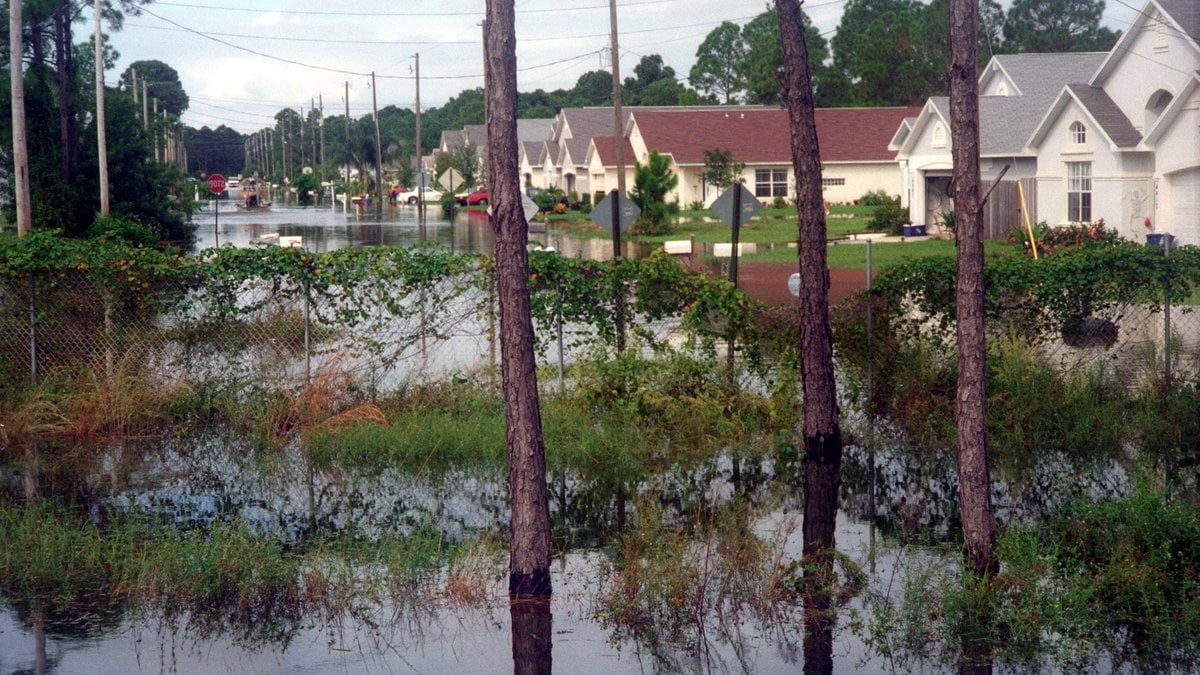
Featured photo: A flooded residential street in Stuart in October 1995, by Joe Shlabotnik, via Wikimedia Commons, licensed under CC BY 2.0. Cropped and resized.