

The short answer: School choice in Florida is a set of separate paths, not one program. A student can attend the zoned public school, apply to another public school through controlled open enrollment or a district choice program, apply to a public charter school, or use a state scholarship run by Step Up For Students or AAA Scholarship Foundation.
By Jeremy Beckham, REALTOR®, SFR | Last updated: November 16, 2026
Buyers often ask whether Florida has school choice and how it works. The honest answer is that it’s several systems run by different offices, each with its own form and calendar.
I’ve been in real estate for 17 years, and I don’t pick schools for anyone or rank them. What I can do is lay out the official options in plain words, point you to the office that actually runs each one, and show you which dates matter right now. Every fact below links to its official source at the bottom.
Key takeaways
- Florida school choice has two big tracks: public-school options run by school districts and charter schools, and state scholarships run by approved scholarship funding organizations (SFOs).
- Scholarship applications go to Step Up For Students or AAA Scholarship Foundation, not to a school district and not through a real estate agent.
- Step Up’s standard 2026-27 window for new Private School and Unique Abilities applications closed November 15, 2026. PEP closed April 30, 2026.
- District choice calendars are separate. Palm Beach County’s 2027-28 Choice application runs through December 4, 2026, and Broward’s runs through January 15, 2027.
- Choice adds options. It never replaces looking up the zoned school for a specific address.
How does school choice work in Florida?
It has two sides. On the public side, a student starts with the zoned school and can apply elsewhere through controlled open enrollment, a district magnet or choice program, or a charter school. On the scholarship side, Step Up For Students and AAA Scholarship Foundation handle applications, eligibility and funding.
The Florida Department of Education (FLDOE) lists six scholarship programs on its K-12 scholarship page, including the Family Empowerment Scholarship, the Florida Tax Credit Scholarship, the Hope Scholarship, New Worlds Reading Scholarship Accounts and the Opportunity Scholarship. The ones most buyers ask about are the Family Empowerment Scholarship (in two branches) and the Florida Tax Credit Scholarship, including its Personalized Education Program.
Here’s the whole map at a glance.
| Path | Who runs it | How you apply | Dates to know (as of Nov 16, 2026) |
|---|---|---|---|
| Zoned public school | Your county school district | District enrollment, by address | Enroll with the district once you have an address |
| Controlled open enrollment | Each district and charter school (s. 1002.31, F.S.) | District or charter process posted on its website | Set by each district; Palm Beach lists March 1-5, 2027 |
| District magnet and choice programs | Each district | District choice portal, usually a lottery | Palm Beach: Oct 8 to Dec 4, 2026. Broward: Nov 9, 2026 to Jan 15, 2027 |
| Charter schools | Each charter school, sponsored by the district | The charter school’s own posted process | Set by each school |
| Private School Scholarship (FES-EO and FTC) | Step Up For Students or AAA Scholarship Foundation | Online through the scholarship organization | 2026-27 new window closed Nov 15, 2026; some exceptions to April 15, 2027 |
| Unique Abilities (FES-UA) | Step Up For Students or AAA Scholarship Foundation | Online through the scholarship organization | 2026-27 new window closed Nov 15, 2026 |
| Personalized Education Program (PEP) | Step Up For Students | Online through Step Up | 2026-27 closed April 30, 2026 |
What public school options does Florida offer besides the zoned school?
Beyond the assigned school, Florida law requires every district and charter school to run controlled open enrollment, which lets a parent from any Florida district apply to a public school that hasn’t reached capacity. Districts also run their own magnet and choice programs, and charter schools are public schools with their own admission process.
Controlled open enrollment
Section 1002.31 of the Florida Statutes is the rule here. It says each district school board and charter school must let a parent from any school district in the state enroll a child in, and transport the child to, any public school that hasn’t reached capacity, as long as the child isn’t under a current expulsion or suspension. A few details that surprise people:
- Transportation is the parent’s job. The statute says the district or charter “may” provide transportation. It doesn’t have to.
- Capacity is posted. Districts and charter schools must update capacity by grade level every 12 weeks and post it on their websites.
- Some students get preference. Districts must give preferential treatment to children of active-duty military whose move came from military orders, children relocated by a foster care placement, children who move because of a court-ordered custody change or the serious illness or death of a custodial parent, and students who live in the district.
- Residents can’t be bumped. Students who live in the district can’t be displaced by an out-of-district student.
- A lottery and a wait list. Each district’s process must include a lottery, a hardship appeal, and a wait list, with parents notified when space opens.
- You can stay. A student who transfers this way may stay at that school through its highest grade.
There’s also a small piece of money tied to this. Under section 1002.31(7), and per Step Up For Students, a household with at least one K-8 student enrolled full time in a non-virtual Florida public school that isn’t their assigned school may qualify for a Transportation Stipend. Step Up lists it at $750 per year, one per household.
Magnet and district choice programs
These are separate from open enrollment, and each district runs its own. Take the School District of Palm Beach County. It says all its Choice and Career Academy programs need a Choice application and a lottery. They are open to students inside and outside the county. Applicants need a Palm Beach County Student ID number first.
Charter schools
The FLDOE describes charter schools as public schools. Each one runs under a performance contract with the school district, which is its sponsor. Charters are open to all students living in the district. A charter can target certain grades or students. It can also give preference to groups such as siblings of current students and children of active-duty service members. Each charter posts its own open enrollment process every year, so you apply with the school itself.
What state scholarships are available in Florida?
This post covers four K-12 scholarships. One is the Family Empowerment Scholarship for Educational Options (FES-EO). Another is the Florida Tax Credit Scholarship (FTC). The third is the Family Empowerment Scholarship for Students with Unique Abilities (FES-UA). The fourth is the Personalized Education Program (PEP), part of FTC. You apply through an SFO.
The FLDOE names two SFOs: AAA Scholarship Foundation and Step Up For Students. People search for “Florida school vouchers.” The official programs are scholarships and education savings accounts (ESAs). This post uses their real names.
FES-EO and FTC
The FLDOE says Governor DeSantis signed House Bill 1 on March 27, 2023. It expanded school choice options for all Florida students. FES-EO (section 1002.394) now covers all K-12 students. It can pay for options such as a participating private school. You apply and renew each year through an SFO.
FTC (section 1002.395) is funded a different way. Businesses get state tax credits for giving to SFOs. The SFOs then award the scholarships. Since the 2023-24 school year, FTC has no income limit. Priority still goes by income. First come students in households at or below 185% of the federal poverty level. Students in foster or out-of-home care are also in that first group. Next come households above 185% but not above 400%.
Step Up offers FES-EO and FTC together as its Private School Scholarship. A student qualifies if they live in Florida and can enroll in grades K-12 at a Florida public school. Dependents of active-duty service members with permanent change of station (PCS) orders to Florida also qualify.
FES-UA (Unique Abilities)
The FLDOE says FES-UA is for students with disabilities as young as age 3. A student can use an ESA instead of going to a public school. The ESA can pay for private school tuition, online learning, tutoring and other approved services. Step Up requires an Individualized Education Plan (IEP) or a validated diagnosis. Its Unique Abilities page lists the qualifying conditions, so check that list.
PEP (Personalized Education Program)
PEP is part of FTC. Step Up describes it as an ESA for K-12 students. It is for students not enrolled full time in a public or private school. Household income does not matter. Funds pay for approved costs such as curriculum, part-time tutoring and testing. The FLDOE says PEP parents write a learning plan. Step Up requires a Student Learning Plan for funding.
How do private schools fit into Florida school choice?
Any Florida student who can enroll in a K-12 public school can apply for Step Up’s Private School Scholarship. There is no income limit. But the scholarship does not enroll the student. The student must enroll at a private school that takes scholarship funds. That school submits the enrollment to Step Up, and the parent approves it.
Here is what the official pages say:
- No income test. The FLDOE says FTC income limits ended in 2023-24. Step Up says income is not used to decide eligibility. It is used only for priority.
- The school has to take part. Step Up’s Find a School page links to the FLDOE Directory of Private Schools. Step Up says it lists private schools that can accept scholarship funds.
- The state does not oversee private schools. Per the FLDOE, private schools in Florida “are not licensed, approved, accredited, or regulated by the Florida Department of Education.” They must fill out a yearly survey for the directory.
- Enrollment is confirmed each quarter. For the Private School Scholarship, the school and the parent complete enrollment in EMA, Step Up’s online system. The school submits it and the parent approves it. For 2026-27, the Quarter 3 deadline is December 15, 2026. A student not yet enrolled in EMA by then has one more date. That student must be enrolled by January 15, 2027 to be considered for any 2026-27 funding.
- Some deadline exceptions. Step Up’s 2026-27 window closed November 15, 2026. Children of active-duty U.S. military members and children in foster or out-of-home care can still apply. Step Up says to call (877) 735-7837 to have an application opened. Students who faced bullying, as described in Florida law, may apply until April 15 with the Hope Notification Form.
This statewide post doesn’t list private schools. The county posts will point to the official directory for each area.
How do I apply for school choice in Florida, and what are the deadlines?
It depends which track you’re on. Scholarships go through Step Up For Students or AAA Scholarship Foundation, online, on the scholarship organization’s calendar. Public options go through the school district or the charter school, on that district’s calendar. As of November 16, 2026, Step Up’s main 2026-27 windows have closed, while several district windows for 2027-28 are open.
Track A: scholarships through Step Up For Students
Here are Step Up’s published 2026-27 dates:
- Renewal applications for all three scholarships ran February 1 to April 30, 2026.
- New applications for the Private School and Unique Abilities scholarships ran February 1 to November 15, 2026.
- New PEP applications ran February 1 to April 30, 2026. Step Up’s PEP page now says 2026-27 applications are closed and offers sign-up for 2027-28 updates.
- Exceptions: Step Up says some Private School Scholarship and PEP students may apply until April 15, 2027, with all follow-up due by May 15, 2027. Funding is not guaranteed.
- Accepting the award: new Private School and Unique Abilities students must accept or decline by December 15, 2026.
Per Step Up, accepting a scholarship shows intent to use it but doesn’t guarantee funding. Step Up hasn’t posted 2027-28 dates on the pages linked here, so watch Step Up and AAA directly instead of planning around a guessed date.
Track B: public choice through the district
Each district sets its own windows, and they don’t line up with Step Up’s. Palm Beach and Broward both require a district student ID number before you can apply, so start that step early. Current dates for my counties are below.
Does school choice change how zoning works when I buy a home?
No. Every Florida address still has an assigned public school set by the county district, and that’s where a student lands unless they apply for and win a seat somewhere else. Choice programs add options on top of zoning, with capacity limits, lotteries and deadlines, so the address lookup still comes first when you’re comparing homes.
Before you write an offer, I’ll help you pull up the district’s official boundary or zone lookup for that exact address. Then you can weigh choice programs, charters or scholarships on the official sites. I don’t recommend or rate schools; the districts and the FLDOE publish that information directly.
How does school choice work in the counties I cover?
Each county district runs its own choice calendar and tools. Martin County School District, St. Lucie Public Schools, the School District of Palm Beach County and Broward County Public Schools each post separate application windows, portals and rules. Indian River, Brevard and Okeechobee have their own processes too. County-by-county posts with private school details are coming next.
Martin County School District (Stuart, Palm City, Jensen Beach, Hobe Sound). For 2026-27, the district opened School Choice on January 1, 2026 to all Florida residents through the FOCUS Parent Portal, with the highest priority for applications completed by March 31, 2026. Martin County residents get priority, out-of-zone students provide their own transportation, and accepted students can stay through the school’s highest grade. Watch the district for its 2027-28 announcement. For Stuart zoning, see my Stuart buyer’s guide. Homes: Stuart, Palm City and the Martin County home search.
St. Lucie Public Schools (Port St. Lucie, Fort Pierce, Tradition, St. Lucie West). St. Lucie uses regional zones instead of neighborhood schools. Elementary and middle schools fall in the Green, Blue or Red zone, split by Midway Road and Florida’s Turnpike, and high schools are assigned by ZIP code. The district’s last cycle ran high school enrollment January 1-31, 2026 and K-8 open enrollment March 1-31, 2026. I walk through the zones in my Port St. Lucie buyer’s guide, and the ZIP-based high schools in my Fort Pierce buyer’s guide. Homes: Port St. Lucie and the St. Lucie County home search.
School District of Palm Beach County (Jupiter, Palm Beach Gardens, West Palm Beach, Wellington, Delray Beach, Boca Raton). The 2027-28 Choice application is open October 8 through December 4, 2026 at mypbchoiceapp.com, and December 4 is the final deadline for all programs. Student ID requests run September 8 to December 4, 2026. The district lists its Controlled Open Enrollment window as March 1-5, 2027. More in my Boca Raton buyer’s guide. Homes: Jupiter, Boca Raton and the Palm Beach County home search.
Broward County Public Schools (Coral Springs, Fort Lauderdale). The 2027-28 School Choice window opened November 9, 2026 at 8 a.m. and runs through January 15, 2027, covering magnet programs, Nova schools and reassignments through the Focus Parent Portal. A BCPS student number is required. It can be requested at any district school with photo ID and the child’s birth certificate. More in my Fort Lauderdale buyer’s guide. Homes: Coral Springs and the Broward County home search.
Frequently asked questions
Does Florida have a school voucher program?
Not by that name. People say “voucher.” Florida’s programs are scholarships and education savings accounts (ESAs). The main ones are FES-EO, FTC, FES-UA and PEP. You apply through a scholarship funding organization (SFO). The SFOs are Step Up For Students and AAA Scholarship Foundation. The SFO decides who qualifies and pays the funds. School districts don’t take these applications.
What is the difference between FES-EO and the Florida Tax Credit Scholarship?
They come from different laws. FES-EO, under section 1002.394, is open to all K-12 students. FTC, under section 1002.395, is funded by business contributions that earn state tax credits. FTC gives priority by household income. Step Up handles both through one Private School Scholarship application, so most applicants see a single form.
What is FES-UA in Florida?
FES-UA is the Family Empowerment Scholarship for Students with Unique Abilities. It serves students with disabilities from age 3. The student gets an education savings account (ESA). The ESA pays for approved costs like private school tuition, online learning and tutoring. The student needs an IEP or a validated diagnosis on Step Up’s list. Apply through Step Up or AAA.
Is the PEP scholarship the same as homeschooling?
No. PEP is an FTC option for K-12 students not enrolled full time in a public or private school. It comes with an education savings account and a required Student Learning Plan. Home education under section 1002.41 is a separate legal program with the school district. Step Up’s PEP handbook covers the details.
Is controlled open enrollment the same as a scholarship?
No. Controlled open enrollment is a public-school option under section 1002.31. Each district and charter school runs it. It lets a student apply to a public school with open seats, and the parent handles transportation. Scholarships are separate. Step Up or AAA runs them, and they mostly fund private school or approved education costs.
Can a student use a Florida scholarship and stay in public school full time?
Generally no. Step Up requires a Public School Attestation each quarter. It confirms the student is not enrolled full time in a public school. Students must also leave public school by the posted date to be considered for Quarter 1 funding. For 2026-27 that date was July 31, 2026. Check Step Up’s current FAQ and handbook before you make changes.
Can I use a Florida scholarship at any private school?
No. The private school must take part in the program and accept scholarship funds. Step Up’s Find a School page links to the FLDOE Directory of Private Schools for that search. The FLDOE does not license, approve, accredit or regulate private schools. So check each school’s admission steps, costs and rules with the school itself.
If I buy a home in Stuart, Port St. Lucie or Jupiter, does school choice replace zoning?
No. Each address still has an assigned school set by Martin County School District, St. Lucie Public Schools or the School District of Palm Beach County. School choice adds the option to apply elsewhere, with capacity limits and deadlines. Look up the assigned school on the district’s official tool before you buy, then explore choice options.
Thinking about a move and want to sort out the school piece?
I’ll help you find the assigned school for any address you’re considering, point you to the right district or scholarship office, and keep your home search moving while you sort out the rest. Call or text me at 772.475.5371.
About the author
Jeremy Beckham, REALTOR®/SFR with NextHome Treasure Coast, has spent 17 years helping buyers and sellers from Fort Pierce through Martin County and south through Palm Beach County to Boca Raton. His office is at 414 S Colorado Ave in Stuart. See how I source my numbers.
This post is general information, not legal or education advice. Scholarship rules, deadlines and district choice windows change every year. Confirm details with the Florida Department of Education, Step Up For Students or AAA Scholarship Foundation, and your county school district before you apply.
Sources
- Florida Department of Education, K-12 Scholarship Programs (six scholarship programs)
- Florida Department of Education, Family Empowerment Scholarship (HB 1 signed March 27, 2023; FES-EO for all K-12 students; FES-UA from age 3 with ESA; two approved SFOs: AAA Scholarship Foundation and Step Up For Students)
- Florida Department of Education, Florida Tax Credit Scholarships (tax credit funding, no income limit since 2023-24, 185% and 400% priority tiers, PEP learning plans)
- Florida Department of Education, Controlled Open Enrollment
- Florida Department of Education, Charter School FAQs
- The 2026 Florida Statutes, section 1002.31, Controlled open enrollment; public school parental choice (capacity every 12 weeks, preferences, lottery, wait list, transportation, K-8 transportation stipend)
- Step Up For Students, FAQs for 2026-27 Scholarship Deadlines and Payment Schedules (application windows, exceptions to April 15, 2027, December 15 acceptance, EMA enrollment deadlines including Quarter 3 December 15, 2026 and January 15, 2027, Public School Attestation, July 31 withdrawal date)
- Florida Department of Education, K-12 Private Schools (not licensed, approved, accredited or regulated by the FLDOE; annual survey for the directory) and Directory of Private Schools
- Step Up For Students, Apply for a Private School Scholarship (income not used for eligibility; active-duty military and foster or out-of-home care deadline exceptions; (877) 735-7837; Hope Notification Form until 4/15)
- Step Up For Students, Find a School (directory of private schools eligible to accept scholarship funds)
- AAA Scholarship Foundation, aaascholarships.org (the other approved SFO; contact listed on the FLDOE Family Empowerment Scholarship page)
- Step Up For Students, Scholarship eligibility FAQ (Private School, FES-UA, PEP and $750 Transportation Stipend eligibility)
- Step Up For Students, Unique Abilities and Personalized Education Program (qualifying conditions, ESA uses, PEP 2026-27 closed)
- Martin County School District, Enrollment Opens January 1 for 26-27 School Year (December 18, 2025)
- St. Lucie Public Schools, Student Assignment (regional zones, 2026 enrollment dates, (772) 429-3930)
- School District of Palm Beach County, School Choice (2027-28 Choice application October 8 to December 4, 2026; Student ID; COE March 1-5, 2027; 561-434-8755)
- Broward County Public Schools, 2027/28 School Choice Application Window Opens on Monday, Nov. 9 (October 30, 2026; window through January 15, 2027; 754-321-2480)
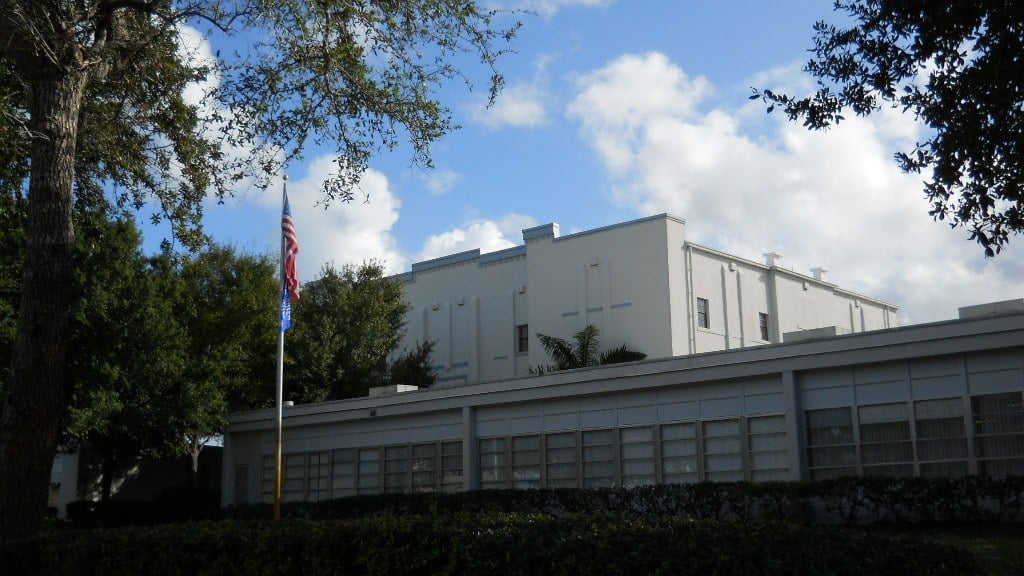
Featured photo: Old Stuart High School on East Ocean Boulevard in Stuart, Florida, photographed November 30, 2010 by Stephen B. Calvert (Clariosophic), via Wikimedia Commons. Licensed under CC BY 3.0. Cropped and resized.